

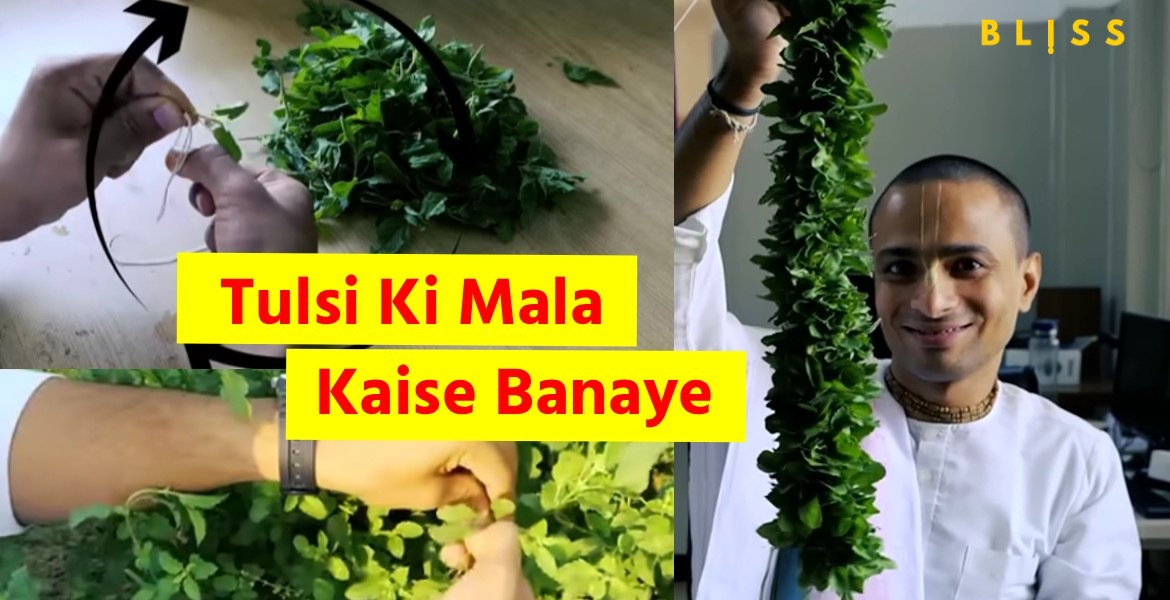
How to make Tulsi Garland at Home
Spiritual Significance of Tulsi
Tulsi is revered as “Tulsi Maharani” and considered a divine plant in Hinduism. In scriptures, Tulsi Devi represents purity, protection, and devotion. Tulsi’s spiritual significance beyond just being a plant, symbolizing devotion and purity in worship. Tulsi (holy basil) garland is an important ritual offering in Hindu worship, especially on Ekadashi.
Tulsi is not just a sacred plant — she’s considered a goddess and a pure devotee of Lord Krishna. Offering Tulsi leaves or garlands is believed to please Lord Krishna more than offering gold or jewels.
This article demonstrates the traditional process of making a Tulsi mala (garland) for devotional purposes, highlighting the religious implication and the divine beauty of these handmade offerings.
तुलसी का आध्यात्मिक महत्व
तुलसी को “तुलसी महारानी” के नाम से पूजनीय माना जाता है और यह हिंदू धर्म में एक दिव्य पौधा मानी जाती है। शास्त्रों में तुलसी देवी को पवित्रता, संरक्षण और भक्ति की प्रतीक बताया गया है। तुलसी का महत्व केवल एक पौधे के रूप में नहीं, बल्कि भक्ति और शुद्धता के प्रतीक के रूप में पूजा में अत्यंत महत्वपूर्ण है। तुलसी की माला हिंदू उपासना का एक आवश्यक भाग है, विशेषकर एकादशी के दिन इसका अधिक महत्व होता है।
तुलसी केवल एक पवित्र पौधा नहीं है — उन्हें एक देवी और भगवान श्रीकृष्ण की महान भक्त माना जाता है। यह माना जाता है कि भगवान श्रीकृष्ण तुलसी के पत्ते या तुलसी की माला के अर्पण से सोने या रत्नों से अधिक प्रसन्न होते हैं।
यह लेख भक्ति के उद्देश्य से तुलसी माला बनाने की पारंपरिक प्रक्रिया को दर्शाता है, जिसमें इस पवित्र कार्य के धार्मिक महत्व और दिव्य सुंदरता को उजागर किया गया है।
Easy Steps for Making Tulsi Mala at Home / घर पर तुलसी माला बनाने के आसान चरण
Step 1: Choosing the Tulsi Plant
First, choose a healthy Tulsi plant with fresh and green leaves. If available, you can also take small twig ends or stems. Working in a clean and peaceful environment helps you stay focused and perform this sacred task with devotion
चरण 1: तुलसी के पौधे का चयन
सबसे पहले एक स्वस्थ तुलसी का पौधा चुनें, जिसमें ताज़े और हरे-भरे पत्ते हों, यदि उपलब्ध हों तो छोटे टहनी के सिरे या डंठल भी ले सकते हैं । स्वच्छ और शांत वातावरण में काम करने से मन एकाग्र रहता है और यह पवित्र कार्य भक्ति भाव से किया जा सकता है।

Step 2: Seeking Permission
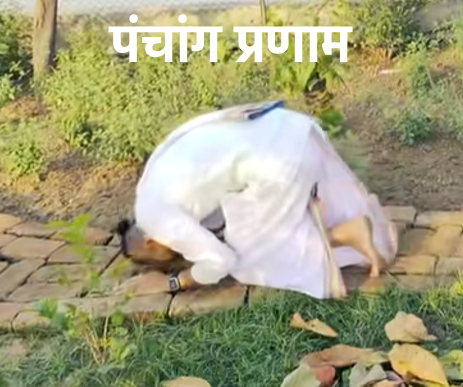
Seeking permission from the Tulsi plant before plucking its leaves is a sacred tradition. Before plucking a tulsi leaf, offer a prayer to ‘Tulsi Maharani’ and politely ask for permission to take the leaves that you intend to offer to Lord Krishna.
चरण 2: तुलसी माता से अनुमति लेना
तुलसी के पत्ते तोड़ने से पहले उनसे अनुमति लेना एक पवित्र परंपरा है। सबसे पहले, तुलसी महारानी को पंचांग प्रणाम करे और तुलसी माता से विनम्रतापूर्वक पत्ते लेने की अनुमति माँगें, जिन्हे आप भगवान की सेवा में अर्पण करने जा रहे है।
Step 3: Collecting & Washing Tulsi Leaves
Tulsi garlands are crafted using both leaves and small twigs (dandies) , not just leaves. Handle each leaf with care as each will soon become part of your Tulsi Mala that will be offered to God.
Tulsi leaves wilt very quickly, ten times faster than flowers. Therefore, when making Tulsi garlands, it is very important to wash and wet the leaves immediately to maintain their freshness and ensure they are offered to Lord Krishna in good condition.
चरण 3: तुलसी पत्तों का संग्रह और शुद्धिकरण
तुलसी की मालाएँ सिर्फ़ पत्तों से नहीं, बल्कि पत्तों और छोटी टहनियों (डंडी) से भी बनाई जाती हैं। तुलसी के पत्ते फूलों से दस गुना ज़्यादा जल्दी मुरझा जाते हैं। इसलिए, तुलसी की माला बनाते समय, पत्तों की ताज़गी बनाए रखने के उन्हें तुरंत धोकर गीला करना बहुत ज़रूरी है। हर पत्ते को सावधानी से संभालें क्योंकि वह जल्द ही आपकी तुलसी माला का हिस्सा बन जाएगा, जिसे भगवान को अर्पित किया जाएगा।
Step 4: Mala Making Technique
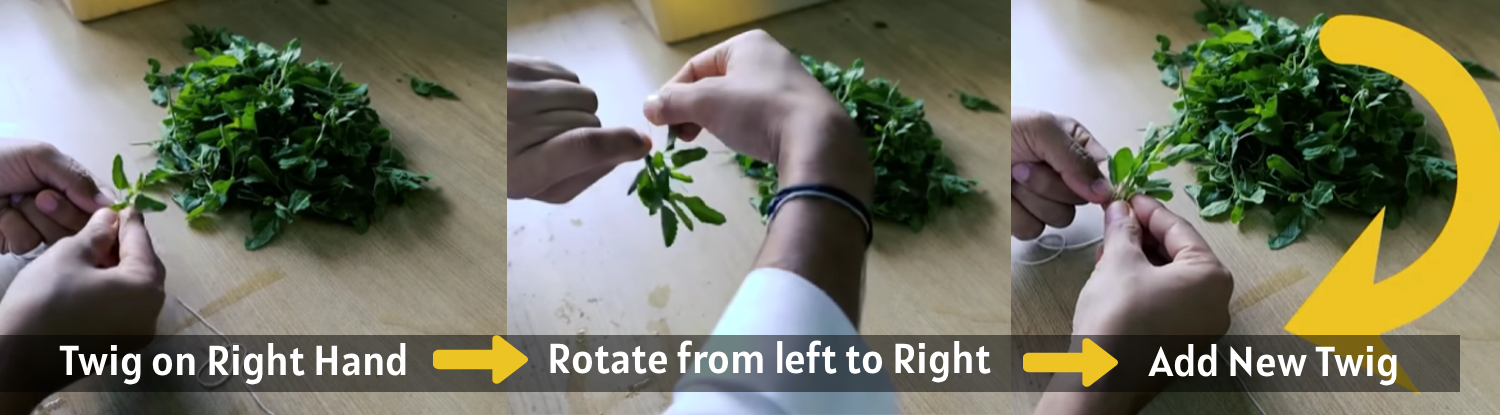
A needle is not used to make Tulsi garlands; instead, the thread and Tulsi leaves are joined together by hand in a circular motion. For small mala take approximately 15 inches thread and continue until your desired length is reached. The technique involves wrapping and rotating the thread while adding Tulsi twigs line by line. This traditional method makes the garlands strong and beautiful.
चरण 4: माला बनाने की विधि
तुलसी की माला बनाने के लिए सुई का इस्तेमाल नहीं किया जाता; बल्कि धागे और तुलसी के पत्तों को हाथ से गोलाकार गति में जोड़ा जाता है। छोटी माला के लिए लगभग 15 इंच लंबा धागा लें और तब तक बुनते रहें जब तक आपकी मनचाही लंबाई न हो जाए। इस तकनीक में धागे को लपेटकर घुमाते हुए तुलसी की टहनियों को पंक्ति दर पंक्ति जोड़ते जाते हैं। इस पारंपरिक विधि से मालाएँ मज़बूत और सुंदर बनती हैं।
Step 5: Offering Tulsi Mala to Lord Krishna
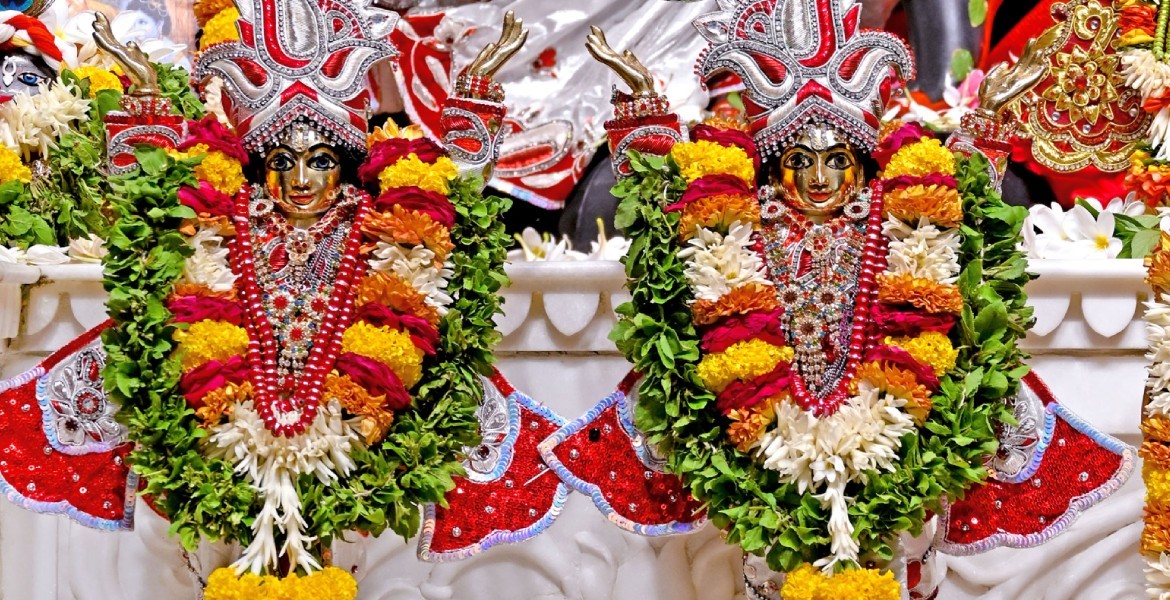
Now, Tulsi mala is ready to offer to GOD as a symbol of your surrender and connection. Offer it with pure heart and devotion. Remember, Offering is more than a ritual — it’s a way to show love and gratitude.
चरण 5: तुलसी माला भगवान श्रीकृष्ण को अर्पित करना
अब, तुलसी की माला आपके समर्पण और जुड़ाव के प्रतीक के रूप में भगवान को अर्पित करने के लिए तैयार है। इसे शुद्ध हृदय और भक्ति के साथ अर्पित करें. याद रखें - अर्पण केवल एक रस्म नहीं है, यह प्रेम और कृतज्ञता व्यक्त करने का एक तरीका है।
The Spiritual Essence
Making a Tulsi garland is not just a creative activity — it’s a spiritual journey. As you string each leaf with care, you begin to feel a deep sense of peace and devotion within. Every leaf becomes a reminder to slow down, focus your mind, and connect your heart with the Divine. When you finally offer the garland to Lord Krishna, it feels truly special — because it’s not just made by your hands, but by your heart. The entire process itself becomes a form of meditation, filling you with purity and joy.
आध्यात्मिक सार
तुलसी की माला बनाना केवल एक कला नहीं, बल्कि एक आध्यात्मिक यात्रा है। जब आप हर पत्ते को प्रेम और सावधानी से पिरोते हैं, तो भीतर एक गहरी शांति और भक्ति का अनुभव होता है। हर पत्ता हमें ठहरने, मन को केंद्रित करने और हृदय से भगवान से जुड़ने की याद दिलाता है। जब आप यह माला भगवान कृष्ण को अर्पित करते हैं, तो यह विशेष महसूस होती है — क्योंकि यह सिर्फ आपके हाथों से नहीं, बल्कि आपके हृदय से बनी होती है। पूरी प्रक्रिया अपने आप में एक ध्यान बन जाती है, जो मन को पवित्रता और आनंद से भर देती है।
Making a Tulsi garland is a bhakti (devotional) practice. The next natural step is understanding devotion and purpose through the Spiritual Guidance. Continue Your devotional Journey with our Guided Basics of Spirituality Course.
🙏 With love and devotion,
🌿 Hare Krishna!